Humanoid face and head skins
Realistic facial covering for social robotics and android platforms, including eyebrow and eyelash implantation where the study calls for it.
For Universities & Research Institutes
We manufacture custom silicone skins for robotics, HCI and soft-robotics research groups — from a single prototype unit to a full study set. Our tooling is 3D printed in house, which keeps the per-part cost low for small batches and makes revision cycles fast.
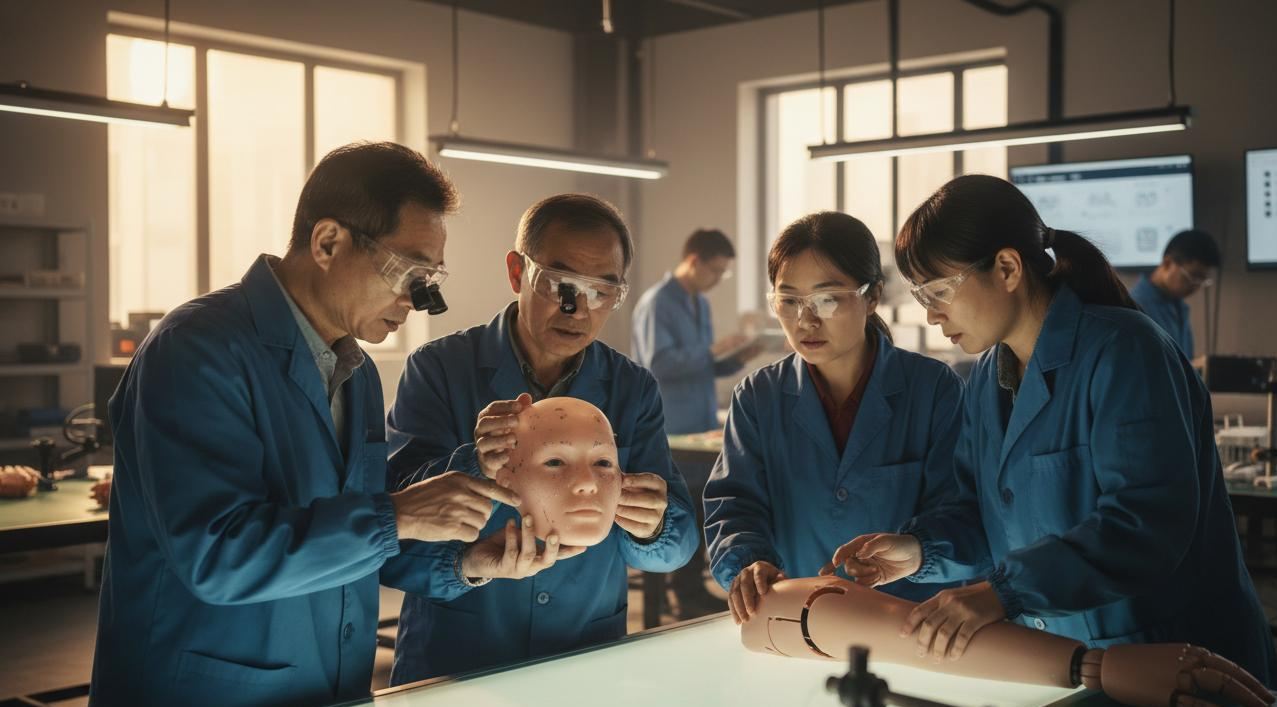
AI-generated illustration
Research data is sensitive, and an unpublished design is exactly the kind of thing you do not want circulating. We are happy to sign your institution's NDA — or to provide our own — before any CAD file, scan or reference photo is sent. Most groups simply reply to our first email asking for the NDA, and we send it back the same day.
Typical Applications
Realistic facial covering for social robotics and android platforms, including eyebrow and eyelash implantation where the study calls for it.
Cast elastomer skins for soft actuators and bio-inspired mechanisms, in the hardness and thickness your model requires.
Silicone bodies and finger pads used as the base layer for tactile sensing research, with optional embedded electrodes.
Consistent, repeatable skin sets when a study needs several identical units rather than one bespoke item.
Skin layers and pad assemblies for training models where realistic feel and repeatable geometry matter.
Low-volume appearance parts for capstone projects, robotics competitions and demonstration units.
How It Works
FAQ
Yes. There is no minimum order quantity. Because our moulds are 3D printed in house, a single prototype part is economical and is how most research projects start with us.
Yes. We are happy to sign your NDA, or to provide our own, before receiving any CAD file, scan or reference material.
Itemised quotations, technical data sheets, material information and commercial invoices for customs. We can complete supplier onboarding forms and, where required, invoice against a purchase order issued by your institution.
Yes. We supply the Shore hardness, silicone chemistry and measured properties of the batch we ship, so the material can be described accurately in a publication.
Yes — most of our research customers are outside China. We ship worldwide and handle the export documentation. Working hours are China time (GMT+8), so we usually reply while your working day is still running.
Tell us the hardness and skin tone you want to work with, and we will post a free 5 × 5 cm swatch so you can test the material before committing to a prototype.