Service

Custom Silicone Skin for Humanoid Robots

We build custom silicone skin for humanoid robots end to end in one factory: 3D modelling, mould making, platinum-cure casting, colour matching and hand hair implantation. Tooling and a first sample in 10–15 working days, minimum order quantity of one piece.

What We Do

One factory for the whole skin, not just the casting

A robot skin rarely fails at the pouring step. It fails at the weak links — colour drift between batches, seams that tear at the joints, hair that falls out. Because modelling, tooling, casting and finishing all sit under one roof, those links are controlled by the same team and stay consistent from the first sample to the thousandth part.

  • 3D scanning and modelling from your sketch, photo or CAD file
  • Mould design and in-house tooling, 3D printed and CNC
  • Platinum-cure silicone casting across the Shore 00–40 range
  • Skin tone matched from reference photos or a physical swatch, target ΔE < 1.5
  • Pore, wrinkle and vein texturing moulded from real references
  • Hand implantation of eyebrows, eyelashes and head hair, one hair at a time
  • Matte, dust-resistant finishing; translucent grades for backlit faces
  • Joint-area reinforcement tested to 200,000 bend cycles
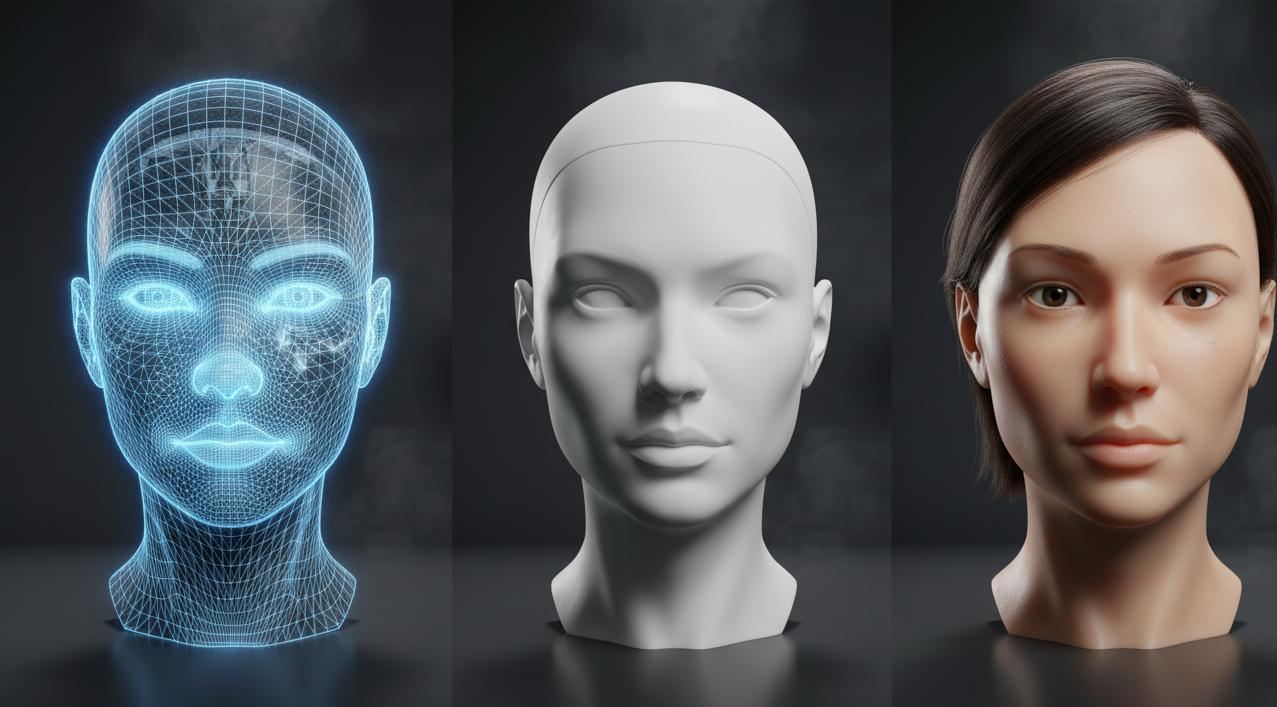
AI-generated illustration of silicone skin production: 3D modelling, tooling, platinum-cure casting and hand finishing

AI-generated illustration

Specifications

Material and process parameters

These are the standard figures we work to. If your mechanism or application needs a different value, tell us early — most of them can be adjusted.

Parameter Standard value What it means for your project
Silicone type Platinum-cure Consistent cure and low shrinkage, so the skin fits the same way on the first part and the hundredth.
Hardness Shore 00–40 Softer grades for faces and necks, firmer grades for hands and structural skin panels.
Skin tone matching Target ΔE < 1.5 Matched from your reference photos or a physical sample, then confirmed with a colour chip before production.
Bend durability 200,000 cycles Tested in joint areas such as the neck and finger seams, where skin cracks first.
Tooling and sampling 10–15 working days Counted from the moment you sign off the 3D data, so your schedule stays predictable.
Minimum order quantity 1 piece Moulds are 3D printed in-house, which keeps single prototypes affordable.
Mould tolerance ±0.1 mm Dimensional accuracy on tooling, so panels line up across a full body set.

Applications

Where our skin is used

Each industry stresses the skin in a different way. Here is what we tune for each, so you can see whether your use case is already covered.

Humanoid and service robots — full body

Full-body skin sets with consistent colour across every panel, for humanoids as well as reception, guidance and companion robots. We plan split lines around your joint axes so the skin moves with the mechanism instead of against it, and we cast matching spares for the panels that wear first.

Robot head and face

Faces are where detail is judged hardest. Pores, wrinkles and lip texture are moulded from references, colour is matched to ΔE < 1.5, and eye and mouth openings are cut to your mechanism. Eyebrows and eyelashes are implanted by hand.

Animatronics and entertainment

Theme-park figures, mascots and studio characters that run for hours a day. We build the skin around a serviceable core so a torn cheek or worn joint can be repaired on site, and we keep a set of spare skins on the existing tooling for fast replacement.

Medical simulators

Training models and phantoms need skin-safe, low-odour formulations with repeatable hardness. We supply technical data sheets with every batch so the numbers go straight into your procurement file.

University and institute research

A single-piece prototype is normal here, not an exception. We work to grant and paper deadlines, provide data sheets for reports, and sign an NDA before you send CAD files or unpublished designs.

Sensor and electronic-skin over-moulding

Developers of sensors and electronic skin use us to over-mould soft silicone onto sensing layers, flexible electrodes and small electronic assemblies. We run trial encapsulation pieces and test parts before committing to a production batch.

How It Works

From your reference to a finished skin in six steps

A fixed sequence with a clear deliverable at every stage, so you always know what you are paying for and when the next milestone lands.

  1. 01

    Send your references

    Sketches, photos, a physical part or a CAD file. We sign an NDA first if your project needs one.

  2. 02

    3D modelling and sign-off

    We return production-ready 3D data and a scale prototype, usually within one week, for you to approve before anything is cut.

  3. 03

    Material and colour selection

    Hardness, translucency and skin tone are chosen for your application, and we send a colour chip for confirmation.

  4. 04

    Tooling and first casting

    Moulds are produced in-house and the first parts are cast — typically within 10–15 working days of data confirmation.

  5. 05

    Finishing and hair implantation

    Matte finishing and final colour touch-up, then hand implantation of eyebrows, eyelashes and hair where required.

  6. 06

    QC and delivery

    Dimensional and colour inspection, export documentation, worldwide shipping, and spare skins kept on file for repeat orders.

What You Send · What You Get

A short input list, a concrete output list

You do not need a finished design to start. A sketch and a photo are enough to open the conversation; everything else we can produce.

What you send us

  • A sketch, reference photos or a scan of the target shape
  • CAD, STL or point-cloud data, if you already have it
  • Your preferred skin tone — a photo or a physical swatch both work
  • Required hardness or flexibility, if your mechanism dictates it
  • Quantity and target delivery date
  • A signed NDA, if your project requires one before data exchange

What you get back

  • Production-ready 3D data, usually within one week
  • A moulding plan with split lines and a material recommendation
  • A first sample skin in your chosen hardness and tone
  • Technical data sheets for the silicone used in your parts
  • Assembly notes and spare skins for replacement
  • Export documentation and worldwide shipping

FAQ

Questions we are asked before every skin project

What is the minimum order quantity?

We can start from a single prototype piece. Our moulds are 3D printed in-house, so low-volume research and prototype projects are welcome — you do not have to commit to a production batch to work with us.

How long does tooling and sampling take?

Typically 10–15 working days after the 3D data is confirmed, depending on complexity. Revisions to the skin after feedback are usually much faster, because the tooling already exists.

Can you match a specific skin tone and add hair or eyebrows?

Yes. We match skin tone from your reference photos or physical samples to a target ΔE < 1.5, and hand-implant eyebrows, eyelashes and head hair where needed.

Do you sign NDAs and ship internationally?

We are happy to sign an NDA before receiving your CAD data. We ship worldwide with export documentation and itemised invoices for both companies and research institutions.

See all frequently asked questions →

Send a sketch or a CAD file — we will tell you what is possible

Tell us the shape, quantity and target date, and we will come back with a straight answer on feasibility, cost and lead time. We can also post a free 5 × 5 cm material swatch so you can judge the hardness and finish before committing.